You made a real investment in your dental implant, so noticing bleeding, swelling or a bad taste around it can be unsettling. The good news? This problem is common, well understood and very treatable when it’s caught early.
So what causes it? A gum infection around a dental implant is almost always caused by plaque bacteria collecting where the implant meets the gum. Left alone, that bacteria inflames the gum and can eventually destroy the bone that holds the implant in place. A history of gum disease, smoking, diabetes and skipped cleanings all raise the risk.
Below, we’ll walk through why it happens, the warning signs to watch for and what we can do to save your implant.
What Is a Gum Infection Around a Dental Implant?
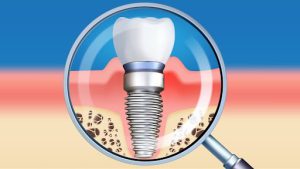
Your implant can’t get a cavity. It’s made of titanium or zirconia, not tooth enamel. But the gum and bone surrounding it are living tissue, and they can become infected just like the tissue around a natural tooth.
Periodontists divide this problem into two stages.
Peri Implant Mucositis
This is the early stage. The gum around the implant looks red and puffy and bleeds when you brush, but the bone underneath is still healthy. Think of it as gingivitis around an implant. With a professional cleaning and better home care, it can be fully reversed.
Peri Implantitis
This is the advanced stage. The infection moves below the gumline and starts breaking down the bone that anchors your implant. Lost bone won’t come back on its own, so this stage needs care from a specialist.
It’s also more common than most people realize. A widely cited review of the research estimated that about 43% of implant patients develop peri implant mucositis and about 22% develop peri implantitis.
What Causes Gum Infection Around a Dental Implant?
Bacteria is almost always the starting point. But certain habits, health conditions and even the way an implant was placed can make a gum infection around a dental implant far more likely. Here are the causes we see most often in our Pittsburgh offices.
Plaque and Bacteria Buildup
Plaque is the sticky film of bacteria that forms on your teeth and implants every day. When it isn’t cleaned away, it irritates the gum around the implant and sets off inflammation. This is the number one cause of peri implant disease.
A History of Gum Disease
If you lost teeth to gum disease, the same bacteria and the same immune response can turn on your implant. Research shows people with a history of periodontitis have about twice the risk of peri implantitis. That’s why we always treat active gum disease before placing an implant.
Smoking
Smoking cuts blood flow to the gums, slows healing and hides early warning signs like bleeding. Smokers tend to develop peri implantitis sooner and face roughly four times the risk after five years.
Poorly Controlled Diabetes
High blood sugar makes it harder for your body to fight infection and heal. People with diabetes can absolutely have successful implants, but keeping blood sugar in a healthy range makes a real difference.
Leftover Dental Cement
Some implant crowns are cemented in place. If even a tiny bit of extra cement gets trapped below the gumline, it acts like a splinter, collecting bacteria and irritating the tissue.
Implant Position and Crown Shape
An implant placed at the wrong angle or depth, or a crown shaped in a way that’s hard to clean, can trap food and plaque where your toothbrush can’t reach.
Thin Gum Tissue
Implants do best when they’re surrounded by a band of firm, healthy gum tissue. When that tissue is thin, brushing can feel sore and the area is more open to bacteria. A gum graft can often fix this.
Skipping Professional Cleanings
Implants need regular professional care, just like natural teeth. Without it, small problems can quietly grow into big ones.
Can a Dental Implant Get Infected Years Later?
Yes, and this surprises a lot of patients. Peri implantitis often shows up years after an implant has healed and been working perfectly. One long term study found it in about 22% of patients more than two decades after their implants were placed.
What changes? Usually something in your health or routine. A new medical condition, a stretch of missed cleanings or a slip in your daily brushing and flossing can all open the door. That’s why we recommend having your implants checked at least once a year, with X rays when needed, so we can catch bone changes before you ever feel a thing.
What Are the Signs of an Infected Dental Implant?
Early infection is often painless, which is exactly why it slips by unnoticed. Keep an eye out for these warning signs.
- Bleeding when you brush or floss around the implant
- Red, swollen or tender gums
- Pus or a bad taste near the implant
- Gums pulling back and showing metal
- Bad breath that won’t go away
- An implant or crown that feels loose (a late sign)
If you notice any of these, don’t wait for pain to show up. The sooner we treat it, the better the chance of saving your implant.
How Is a Gum Infection Around an Implant Treated?
Treatment depends on how far the infection has gone. Our goal is always to save your implant with the most conservative approach that will work.
Deep Cleaning and Antimicrobial Therapy
For early infections, we carefully remove plaque and hardened buildup from the implant surface and below the gumline. An antimicrobial rinse or medication may be added to help the tissue heal.
Laser Gum Therapy
Laser gum therapy helps clean infected tissue around the implant with minimal bleeding and very little discomfort afterward.
Surgery and Bone Regeneration
When bone has been lost, we may need to open the area, thoroughly clean the implant surface and rebuild support with bone regeneration or bone grafting.
Implant Removal and Replacement
If too much bone is gone, removing the implant may be the healthiest choice. The good news is that after the area heals and bone is rebuilt, a new implant is often possible.
How to Prevent Infection Around Your Dental Implant
Most implant infections can be prevented. A few simple habits go a long way.
- Brush twice a day with a soft toothbrush, paying close attention to where the implant meets the gum.
- Clean between teeth daily with floss, small interdental brushes or a water flosser.
- Keep up with maintenance visits. If you’ve had gum disease, every three to four months is usually best.
- Quit smoking and keep diabetes well managed.
- Treat gum disease first before getting a new implant.
- Choose an experienced specialist to place and monitor your implant.
Why See a Periodontist for Implant Problems?
A periodontist is a dentist with about three extra years of specialty training focused on the gums, the jawbone and dental implants. Your general dentist is a great first stop for any implant concern, and many will refer you to a periodontist when an infection reaches below the gumline.
It’s a good idea to see a periodontist when you notice any of the following.
- X rays show bone loss around your implant
- Bleeding or swelling keeps coming back, even after cleanings
- The gum is pulling away and showing metal
- The implant or crown feels loose
- You have a history of gum disease and want a plan to protect your implants
At a periodontal evaluation, expect a gentle measurement of the gum pocket around the implant, X rays to check the bone and a close look at how the crown fits. This helps pinpoint the real cause, so treatment solves the problem instead of just calming the symptoms for a while. Catching peri implantitis early can be the difference between keeping an implant and losing it.
Frequently Asked Questions
Is peri implantitis painful?
Usually not at first. Most people notice bleeding or swelling long before any pain, which is why regular checkups are so important.
Can peri implantitis be reversed?
The early stage, peri implant mucositis, can be fully reversed. Peri implantitis can be stopped, and lost bone can often be partly rebuilt with regenerative treatment.
How common is infection around dental implants?
Fairly common. Research suggests about one in five implant patients will develop peri implantitis at some point. Good home care and regular maintenance lower that risk a lot.
Can I treat an implant infection at home?
Not completely. Better brushing and flossing help, but bacteria below the gumline need professional cleaning. If bone is involved, you’ll need specialist care.
Should I see my dentist or a periodontist?
Your general dentist is a great first stop. If there are signs of bone loss or the infection keeps coming back, a periodontist has the training and tools to treat it.
Worried About Your Implant? Let’s Take a Look
Bleeding, swelling or tenderness is your body’s way of asking for help. The sooner a gum infection around a dental implant is checked, the more options you’ll have to save it.
Our team has cared for Pittsburgh smiles since 1987, and we’d be glad to help you protect yours. Request a consultation or call the office closest to you.
- McKees Rocks at 6201 Steubenville Pike, 412.787.7555
- Pittsburgh at 750 Washington Road, Suites 3 and 4, 412.344.3778
Sources
- FDI World Dental Federation, Consensus report on risk factors and prevalence of peri implant diseases, International Dental Journal, 2019 (Meyle J, et al.)